TRIR - what is the total recordable incident rate and how should it be interpreted?

Alex Niemczyk
—
6/18/2026
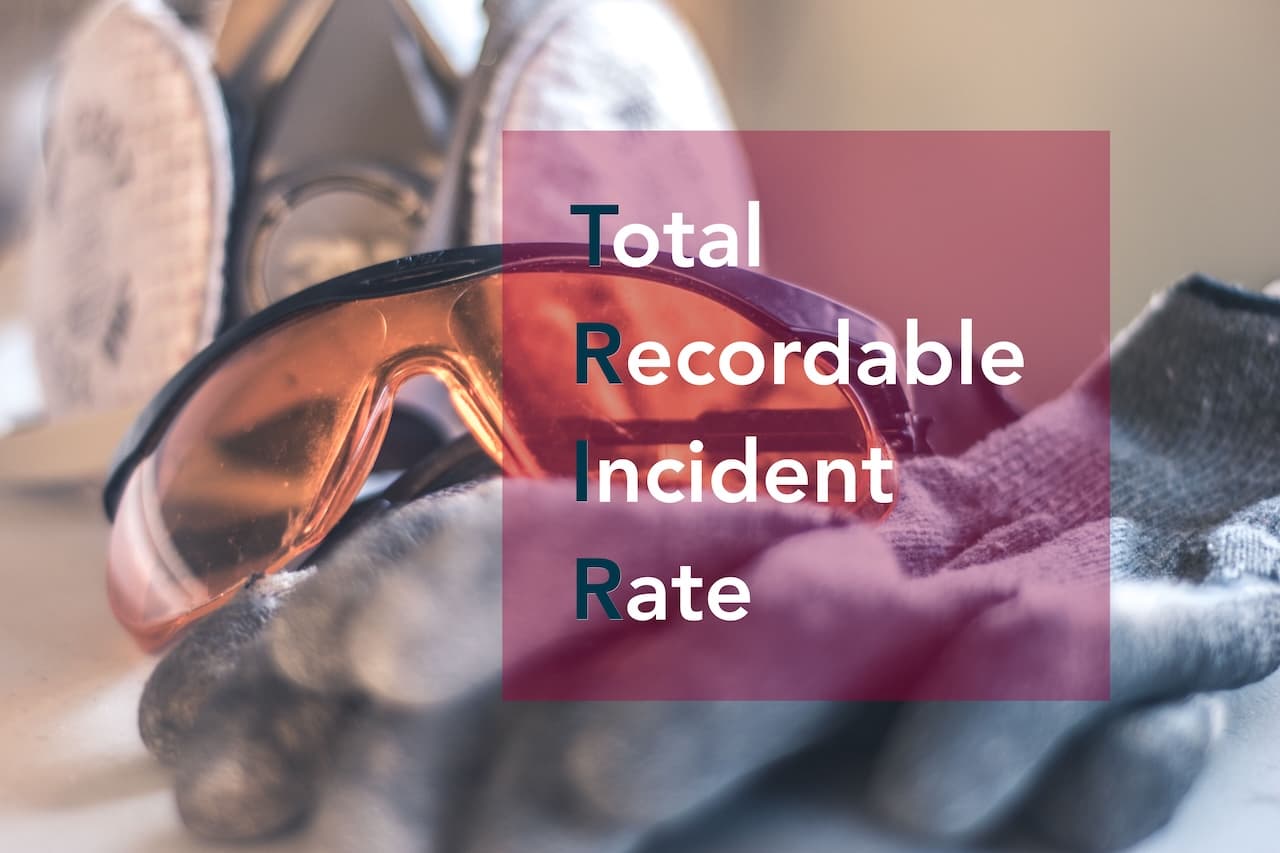
Workplace safety should not be assessed solely on the basis of whether "nothing happened" in a given month. In modern HSE management, it is important to measure trends, analyze incidents, and verify whether preventive actions actually reduce risk. One of the indicators used for this type of assessment is TRIR, or Total Recordable Incident Rate.
TRIR is particularly common in organizations operating internationally, as well as in higher-risk industries such as industry, construction, logistics, energy, manufacturing, and the petrochemical sector. It is also increasingly appearing in customer requirements, supplier audits, and ESG reports.
What does TRIR tell us?
TRIR is an indicator that shows the number of recordable work-related incidents in relation to a defined number of hours worked. In practice, it helps answer the question: How many more serious HSE incidents occur in an organization in relation to the scale of its operations?
This makes it possible to compare safety performance between branches, projects, or sites, even if they differ in the number of employees. The number of accidents alone does not always provide the full picture. Two companies may each record three incidents in a year, but if one employs 50 people and the other 2,000, the level of risk and the scale of the problem will look completely different. TRIR helps make such comparisons more realistic.
How is TRIR calculated?
The TRIR indicator is calculated using the following formula:
TRIR = numberOfIncidents * 200,000 / numberOfWorkHours
Where does this mysterious number 200,000 come from? It corresponds to the approximate number of hours worked by 100 full-time employees in one year. 40 hours * 50 weeks * 100 employees. This value is used so that the result can be referred to a comparable scale.
Example:A company recorded 3 recordable incidents during the year, and all employees worked a total of 400,000 hours.
TRIR = 3 * 200,000 / 400,000 = 1.5
TRIR is 1.5, which means that statistically, there are 1.5 recordable incidents per 100 full-time employees during the analyzed period.
What incidents are included in TRIR?
TRIR does not include every minor cut or situation requiring only basic first aid. The indicator covers incidents that are considered recordable according to the adopted reporting criteria.
Most often, these are cases that result in, among other things:
- medical treatment beyond first aid,
- inability to work,
- restricted work duties,
- transfer of an employee to another position,
- loss of consciousness,
- serious injury or occupational illness,
- employee death.
Why do companies monitor TRIR?
TRIR is useful because it simplifies safety assessment into one clearly defined indicator. It allows organizations to quickly see whether the situation is improving, deteriorating, or remaining at a similar level.
Companies use TRIR, among other things, to:
- monitor HSE performance over time,
- compare sites, branches, or projects,
- assess the effectiveness of preventive actions,
- prepare reports for customers and investors,
- participate in tenders and supplier qualification processes,
- report data within safety management systems,
- identify areas requiring additional support.
In some industries, a low TRIR can be an important business argument. It shows that an organization can manage risk and maintain stable safety standards. Conversely, a high or increasing TRIR can become a warning signal for management, customers, and business partners.
How should TRIR be interpreted?
There is no single universal TRIR level that would be considered "good" for every company. Interpretation depends on the industry, type of work performed, size of the organization, reporting system, and risk profile.
A low TRIR may indicate an effective HSE system, good prevention, and a high level of employee awareness. However, it does not always mean that the organization is free from hazards. It may happen that a low result is due to insufficient reporting or employees’ fear of reporting incidents!!
A high TRIR also requires careful analysis. It may indicate real safety problems, but it may also appear in an organization that has only recently started reporting incidents reliably. Therefore, the numerical result itself should not be assessed without context.
The most important thing is to observe the trend. If TRIR is steadily decreasing, this may indicate improved effectiveness of HSE activities. If it is increasing, it is worth checking where incidents occur, what their causes are, and whether the implemented corrective actions are sufficient.
Limitations of the indicator
TRIR is a lagging indicator. This means that it describes events that have already occurred. It does not directly show whether the organization effectively prevents incidents or whether employees follow safety rules on a daily basis.
For this reason, TRIR should not be treated as the only measure of HSE performance. Excessive focus on lowering the indicator may lead to undesirable behaviors, such as discouraging employees from reporting injuries. In such a situation, the result looks better in spreadsheets, but the actual level of safety does not improve.
TRIR should be analyzed together with other data, such as the number of near misses, audit results, safety observations, corrective actions, training, workplace inspections, or hazard reports.
How to analyze TRIR with Action Audit?
TRIR analysis requires reliable data, a consistent incident reporting process, and an effective mechanism for drawing conclusions. In this area, Action Audit can be a helpful tool, supporting organizations in collecting incident information, analyzing causes, and reporting results internally.
In the reporting module, every employee can and should report incidents, near misses, and safety-related hazards. This is important because the quality of TRIR analysis depends on the completeness and reliability of the input data. If incidents are not reported, the indicator may not reflect the actual situation in the organization.
Incident data collected in the system forms the basis for TRIR calculations. Information about the number of recordable incidents, when they occurred, their location, type of incident, or organizational unit makes it possible to analyze the result not only at the company-wide level, but also in relation to specific areas, projects, or sites.
The follow-up action plan module also plays an important role. It can be used to conduct root cause analysis (RCA) and other incident analyses. As a result, the organization does not stop at simply recording an incident, but can plan corrective and preventive actions, assign responsibilities, set deadlines, and monitor implementation.
The TRIR result can be reported within the organization thanks to the notification system. This allows the relevant people to be kept informed about results, trends, comparisons, threshold exceedances, or the need to take action.
Action Audit can therefore support the full process of working with the TRIR indicator: from incident reporting, through data and cause analysis, to follow-up actions and communication of results within the organization.
Summary
TRIR is one of the most important indicators used to assess workplace safety. It allows organizations to compare the number of recordable incidents with the number of hours worked, providing a more objective picture than the number of accidents alone.
This indicator is useful for reporting, trend analysis, performance comparison, and assessing the effectiveness of HSE activities. However, it should be remembered that TRIR shows the past, not the full picture of the current safety level. Therefore, it should be used together with leading indicators and qualitative incident analysis.
Action Audit can be used to work with the TRIR indicator, supporting incident reporting, data analysis, follow-up action planning, and reporting results within the organization.
The most important goal is not simply to reduce TRIR, but to create a work environment in which hazards are reported, incident causes are thoroughly analyzed, and preventive actions genuinely protect people from injuries.