

5S Audit Software
5S audit
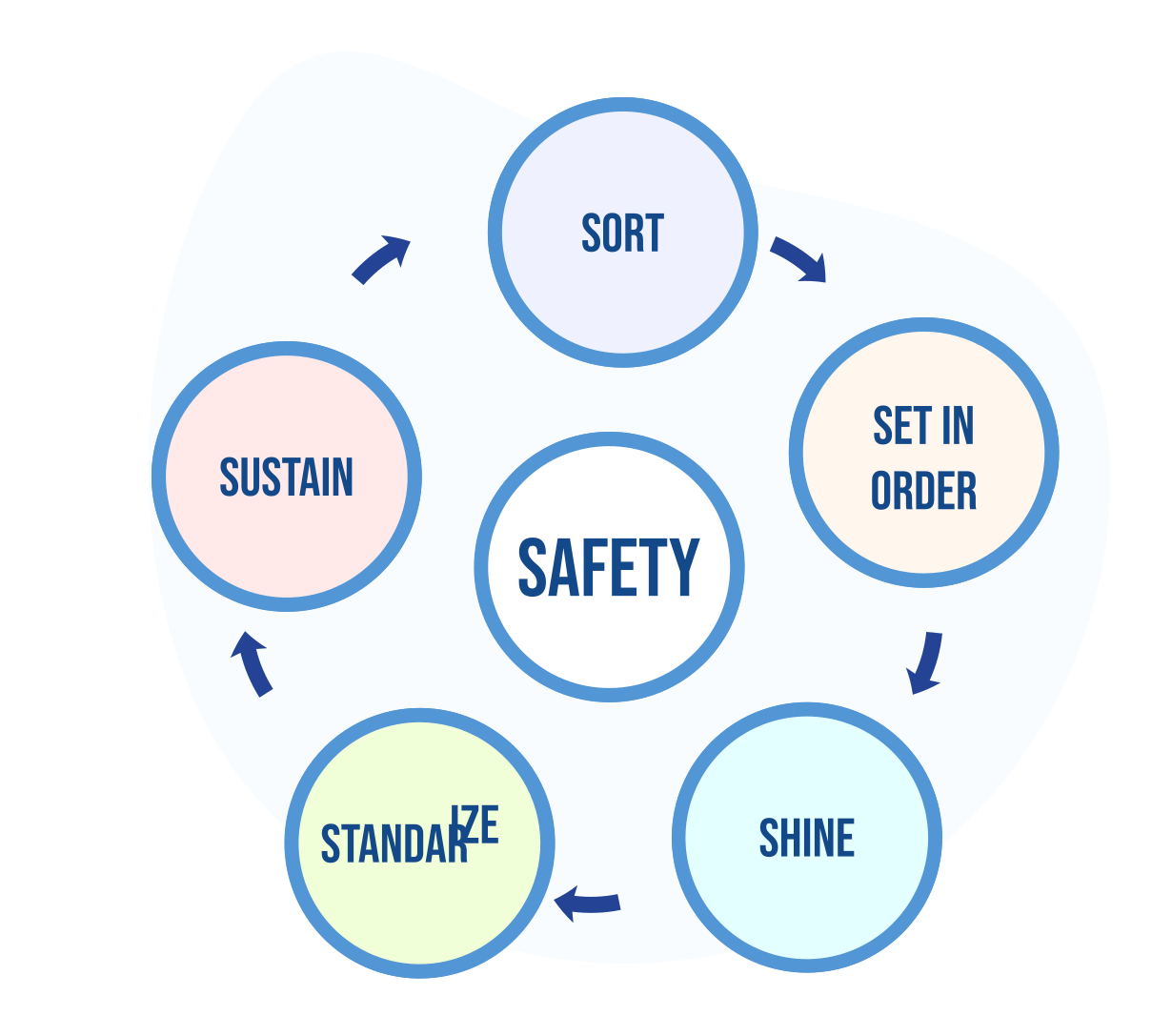
5S audits, as the name suggests, focus on five categories. The five basic categories are:
- Seiri -> Sort
- Seiton -> Set in order
- Seiso -> Shine
- Seiketsu -> Standarize
- Shitsuke -> Self-discipline
1. Sort / select (Seiri)
Distinguish what is needed and what is not
- necessary - will be discussed further in the next stage,
- possibly necessary - we mark them appropriately and store them for a certain period of time (after that time we decide whether they are necessary or not),
- unnecessary - we throw them out/get rid of them from the workspace.
- Are all materials, tools and devices identified and needed at the workplace?
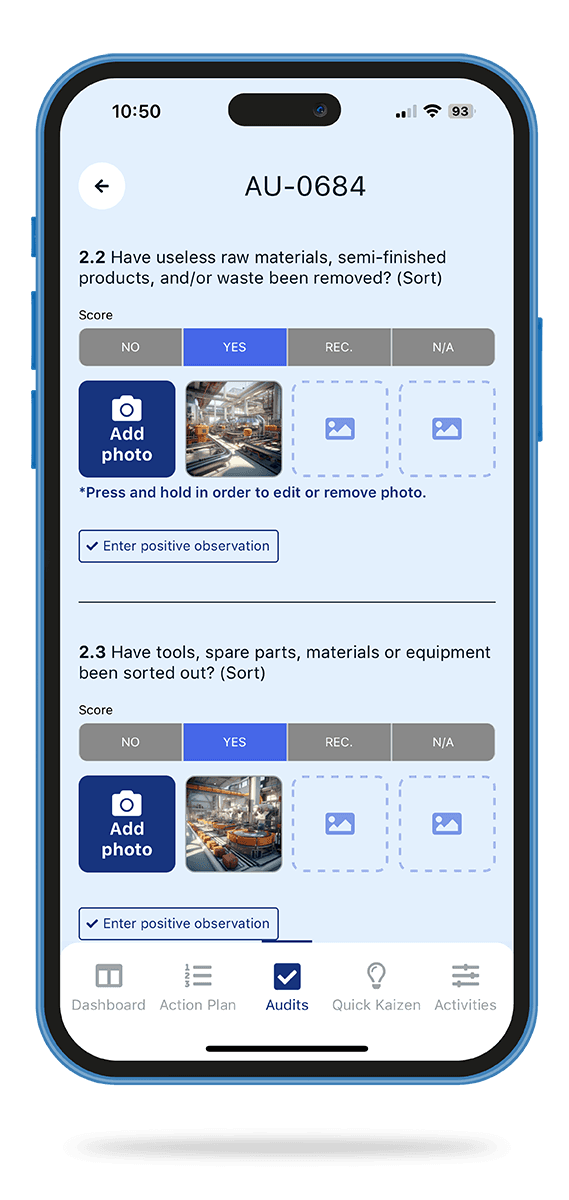
- Have useless raw materials, intermediates and/or waste been removed?
- Have tools, spare parts, materials or equipment been organised?
2. Set in order (Seiton)
A place for everything and everything in its place
- Description/marking of places for specific items (e.g. lines, labels, plates),
- marking with colors/arrows/indicators,
- shadow boards,
- indication of minimum and maximum levels (e.g. semi-finished products).
- Is it clear what is the usefulness of all pipes, cables?
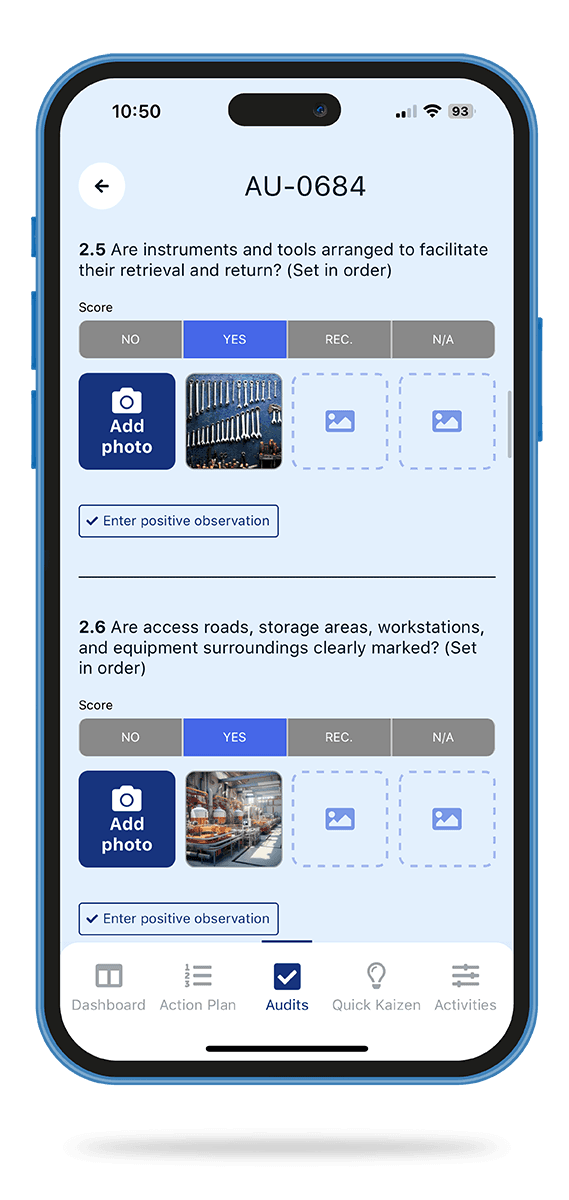
- Are instruments and tools arranged for easy retrieval and return?
- Are access roads, storage areas, workstations and equipment surroundings clearly marked?
3. Shine (Seiso)
Cleaning and maintaining cleanliness and good organization of the workplace.
- cleaning - taking care of the cleanliness and proper maintenance of machines, equipment, tools, etc.
- checking - identifying the causes of dirt and impurities and eliminating them.
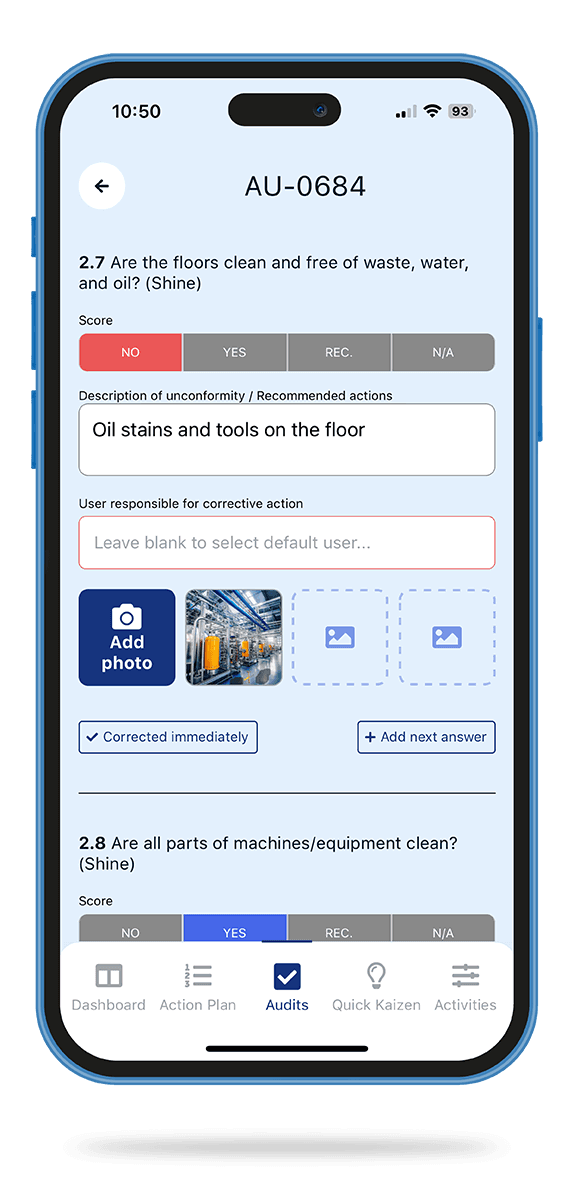
- Are the floors clean and free of waste, water and oil?
- Are all machine/equipment parts clean?
- Is there a person responsible for supervising cleaning?
4. Standarize (Seiketsu)
Maintain and monitor the first three steps of 5S
- creating instructions (clear and precise instructions for the earlier stages of 5S),
- defining the scope of activities and the employees responsible for them,
- safeguarding new rules from returning to old habits.
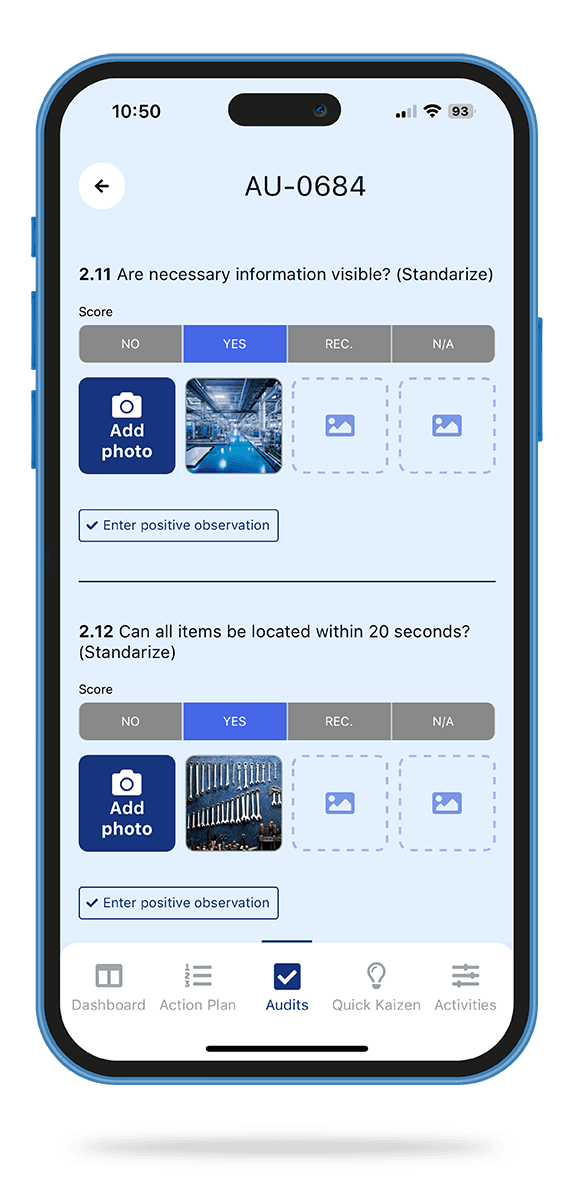
- Are standard procedures described, clear and actively applied?
- Is the necessary information visible?
- Can almost all objects be located in 20 seconds?
5. Self-discipline (Shitsuke)
Follow the rules, don't fall back into old habits
- Are daily reports done correctly and on time?
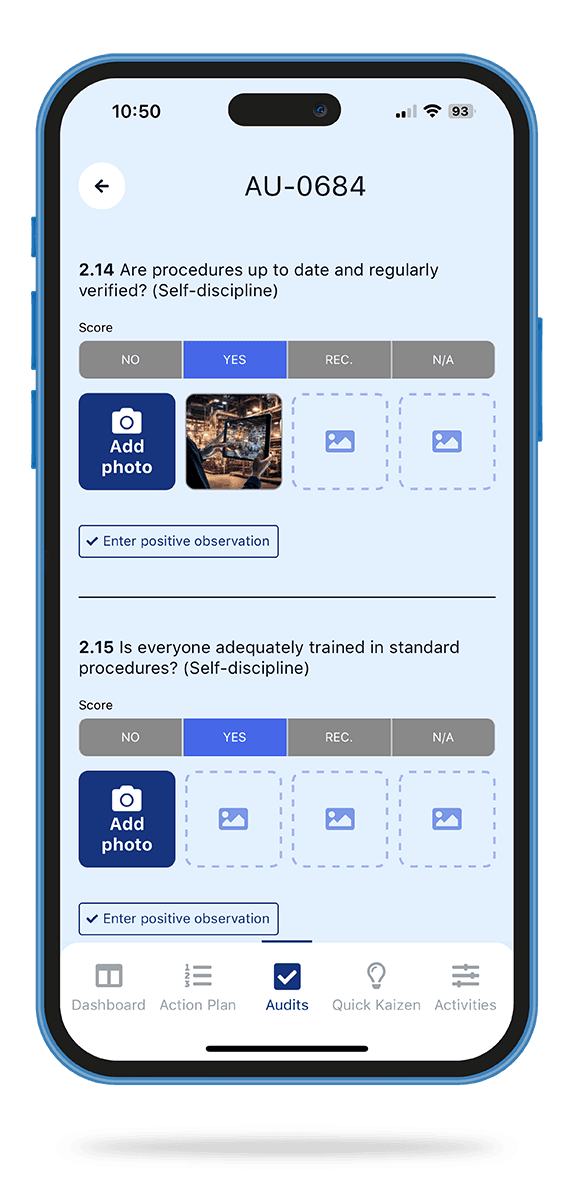
- Are the procedures up to date and regularly reviewed?
- Is everyone adequately trained in standard procedures?
5S Audits on the Action Audit platform
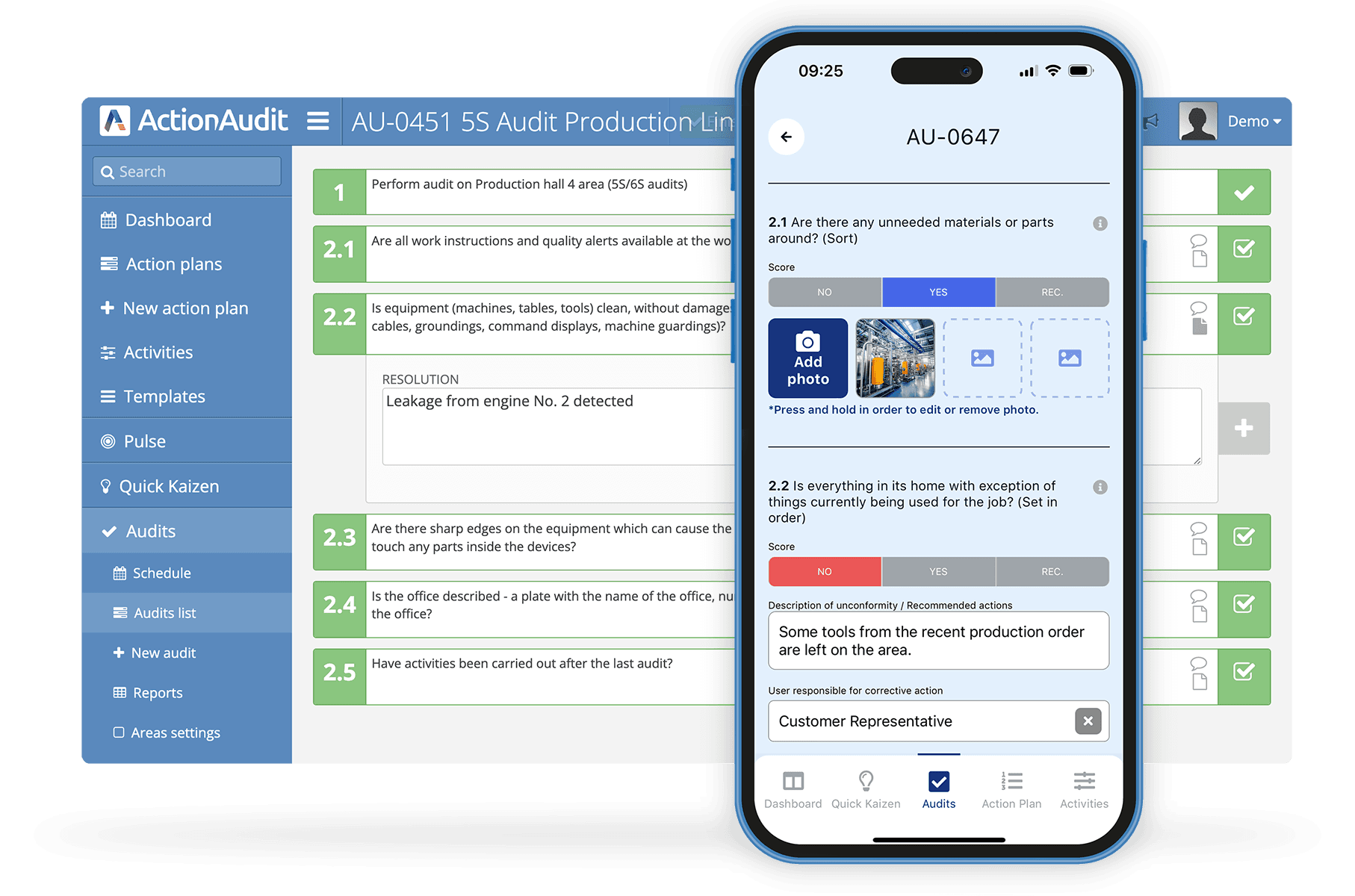
- the ability to create your own checklists
- the ability of building groups of many auditors
- the ability to schedule audits, also on multiple layers.
Key benefits of implementing 5S audits using Action Audit software
Overall improvement of the quality of the auditing process - transparent scheduling, advanced configuration options, automatic assigning of auditors and addressing of corrective actions, combined with accurate real time reports, result in an overall improvement in the quality, transparency and reliability of the audit process.
Time saving - the information obtained from the current users of the application shows that they achieve between 60 and 80 percent savings on time they previously spent on servicing the auditing process.
Greater team involvement - having a tool with which auditors can carry out an audit from a computer, a tablet or a phone, and people responsible for corrective actions have access to comprehensive information about any inconsistencies, the involvement of the entire staff is increased and the effectiveness of interdepartmental cooperation is improved.
5S audit - frequently asked questions
What is a 5S audit?
A 5S audit is a structured check of how well a workplace follows the five steps of the 5S method - Sort, Set in order, Shine, Standardize and Self-discipline. It verifies that work areas stay organized, clean and efficient, and it highlights areas for continuous improvement.What is 5S audit software and a 5S platform?
5S audit software replaces paper checklists and spreadsheets for planning, scheduling and running 5S audits. A platform like Action Audit lets you build your own 5S checklists, schedule recurring audits, and complete them on a computer, tablet or phone, with scores, photos and corrective actions captured in real time.What are the five S's in a 5S audit?
The five categories are Seiri (Sort), Seiton (Set in order), Seiso (Shine), Seiketsu (Standardize) and Shitsuke (Self-discipline). They are implemented in that order, each one building on the previous step.How often should 5S audits be conducted?
Frequency depends on the area and its maturity. Many organizations run frequent short 5S audits on the shop floor - often weekly or even daily for critical zones - supported by less frequent, broader management reviews to sustain the standard over time.What is the difference between a 5S and a 6S audit?
A 6S audit is a 5S audit with Safety added as a separate sixth category. The five core steps are identical; 6S simply makes Safety an explicit, separately scored area. Learn more about 6S audits.How to run Action Audit in 3 steps?
Step 1
Click on the link below and fill out a short form in which we will ask you to present a few basic parameters regarding audits in your company.
Step 2
One of our specialists will contact you to arrange an online meeting to see how Action Audit will work in your organization.
Step 3
Based on the information from the form and the meeting, we will prepare an Action Audit especially for you and make it available for free testing for 30, 45 or even 60 days!